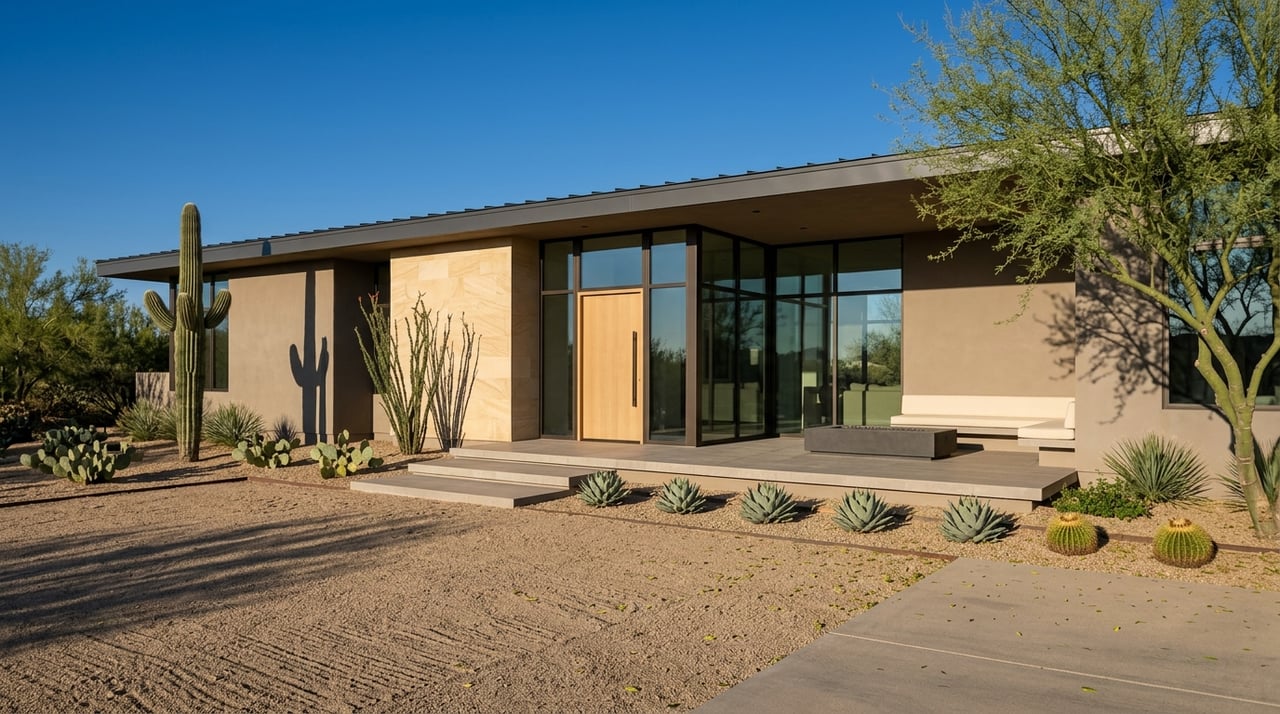
Sedona vs Scottsdale Luxury Homes: Which Market Fits?
May 14, 2026
May 14, 2026
If you are choosing between Sedona and Scottsdale for your next luxury home, you are really choosing between two very different versions of Arizona living. One offers red-rock scenery, privacy, and a retreat feel. The other gives you deeper inventory, resort-style convenience, and a broader luxury amenity base. This guide will help you compare pricing, lifestyle, neighborhoods, and second-home considerations so you can decide which market fits the way you want to live. Let’s dive in.
Both Sedona and Scottsdale sit near the million-dollar mark, but they function differently once you look closer. In March 2026, Scottsdale’s median listing price was about $1.06M, while Sedona’s was about $1.10M.
The bigger difference is market depth. Scottsdale had roughly 3,947 homes for sale, compared with about 366 in Sedona, which means you will usually see far more choices in Scottsdale at any given time.
Market pace is also fairly close, though Sedona moved a bit faster in this snapshot. Median days on market were 65 in Scottsdale and 56 in Sedona, with both markets described as balanced and sale-to-list ratios of 97% in Scottsdale and 98% in Sedona.
If you want a wide range of luxury options, Scottsdale has the broader playing field. Current neighborhood-level data shows North Scottsdale around $1.499M, ZIP code 85255 around $1.749M, and ZIP code 85262 around $2.1M.
That range matters because it gives you more ways to match your budget with your lifestyle goals. Whether you want a lock-and-leave home, a golf community property, or a large custom estate, Scottsdale gives you more inventory across more price points.
Sedona’s luxury market is smaller and more tied to view corridors, land, and setting. ZIP code 86336 is about $1.38M, while 86351 is about $876K, and Back O’Beyond examples show homes estimated around $2.19M and $5.3M.
In practical terms, that often means a Sedona luxury search is less about sorting through hundreds of similar properties and more about waiting for the right home in the right location. Scarcity can be part of the appeal, especially if your priority is a unique setting rather than maximum choice.
Scottsdale feels like an urban-resort luxury market. The City of Scottsdale says Old Town includes more than 90 restaurants, 320 retail shops, and more than 80 art galleries, while Visit Arizona describes the city as the Phoenix metro’s hub for fine dining, high-end shopping, luxury resorts, and more than 50 luxury resort and day spas.
If you want easy access to dining, events, shopping, galleries, and polished resort amenities, Scottsdale makes that lifestyle very convenient. The city also averages 314 sunny days a year, which supports year-round outdoor living.
Sedona delivers a very different kind of luxury experience. It is built around red-rock views, trail access, wellness, art, and a slower, more retreat-oriented atmosphere.
Visit Arizona highlights Sedona’s iconic rock formations, Oak Creek Canyon, Uptown shopping and galleries, Tlaquepaque, and resort spas. The city also has a strong arts presence, with the City of Sedona reporting $13.4 million in arts activity in 2022, supported by 20 privately owned galleries and more than 14 nonprofit arts and culture organizations.
Both cities support an outdoor lifestyle, but the experience is not the same. In Scottsdale, the McDowell Sonoran Preserve includes more than 60 miles of trails and adds a major recreational asset within an urban setting.
In Sedona, trails are woven more directly into the identity of the place. The Bell Rock Pathway is used for hiking, horseback riding, and mountain biking, and the surrounding landscape becomes part of daily life in a way many buyers find hard to replicate elsewhere.
Scottsdale’s luxury homes are spread across several distinct submarkets. Current data shows DC Ranch around $3.82M, Desert Mountain around $3.38M, Gainey Ranch around $1.39M, and McCormick Ranch around $992.5K.
At the top end, Scottsdale also shows a very high pricing ceiling. Silverleaf listings range from the multi-million-dollar tier up to nearly $38M, which says a lot about the city’s depth in the luxury segment.
Sedona’s high-end homes are concentrated in scenic pockets and focus areas identified in the 2024 Sedona Community Plan, including Uptown, West Sedona Commercial Corridor, Schnebly/Oak Creek, Soldiers Pass, Sunset, Western Gateway, and Uptown. Here, location often has as much to do with views, privacy, and trail access as it does with a neighborhood label.
Sedona also offers a broader mix of property types than some luxury buyers expect. Market pages show single-family homes, condos, townhomes, multi-family homes, mobile homes, and land, which can widen your options if you are open to different ownership styles.
Scottsdale allows guest houses on single-family properties, which can be useful if you want space for visitors or multigenerational use. Sedona examples in areas like Back O’Beyond also show guest-house potential, especially on larger sites, but the overall product is more tightly tied to lot characteristics and setting.
If flexibility matters, the right answer depends on what kind of flexibility you want. Scottsdale tends to offer more product variety at scale, while Sedona often offers more one-of-a-kind site value.
If your luxury home may double as a second home or occasional rental, local rules matter. Scottsdale allows vacation and short-term rentals by-right in residential districts, but owners must obtain a Scottsdale license, notify neighbors, carry at least $500,000 in liability coverage, register with Maricopa County, comply with state tax licensing, and follow occupancy and use limits.
Scottsdale also states that guest houses cannot be rented separately from the main residence. For buyers thinking about a flexible-use property, that is an important detail to understand early.
Sedona is more operationally restrictive. Owners who rent even one day per year need a Sedona short-term rental permit and a TPT license before advertising or renting, while rentals of 30 days or more do not require a permit.
Sedona also states that short-term rentals may not advertise or host special events. That creates a different ownership experience for buyers who are weighing part-time use against income potential.
Sedona reports that more than 18% of its housing inventory has been converted into short-term rentals, which helps explain the city’s policy focus. Scottsdale, by contrast, offers a more by-right framework with defined licensing and operational requirements.
For you as a buyer, the takeaway is simple: if rental flexibility is central to your plan, you need to compare not just the home, but also the local operating rules. A beautiful property is only a fit if it works with how you intend to use it.
With far more active listings and a larger amenity base, Scottsdale likely offers better resale liquidity. There are simply more buyers looking across a wider set of luxury lifestyles, from golf and resort living to urban convenience and custom estates.
That can matter if you value optionality. A broader buyer pool may support smoother resale when your plans change.
Sedona’s smaller housing stock, preservation-minded planning, and strong tourism identity support a different kind of value story. The appeal often comes from scarcity, views, privacy, and the fact that many homes feel difficult to duplicate.
For the right property, especially in view-driven areas, that scarcity can help support premium pricing. If your goal is to own something distinctive and lifestyle-led, Sedona may feel more compelling than a market with more supply.
Scottsdale may be the stronger fit if you want:
This market often suits buyers who want luxury with convenience, activity, and multiple lifestyle options in one city.
Sedona may be the better fit if you want:
This market often appeals to buyers who see their home as a personal sanctuary first and an asset second.
The best choice is not about which city is better on paper. It is about which market matches your priorities, your daily routine, and your long-term plan for the property.
If you want more options, more amenities, and more urban-resort convenience, Scottsdale stands out. If you want more scenery, more privacy, and a stronger retreat feel, Sedona is hard to beat.
When you are comparing luxury homes across both markets, it helps to work with someone who understands the real differences behind the listing photos. If you want candid guidance on Sedona, Scottsdale, or both, connect with Kris Anderson- ILoveSedonaRealEstate for strategic, high-touch support tailored to your goals.
At ILoveSedonaRealEstate, we’re committed to making every step of your real estate experience seamless and rewarding. Contact us today to discover how our local expertise and tailored service can help you achieve your real estate goals.