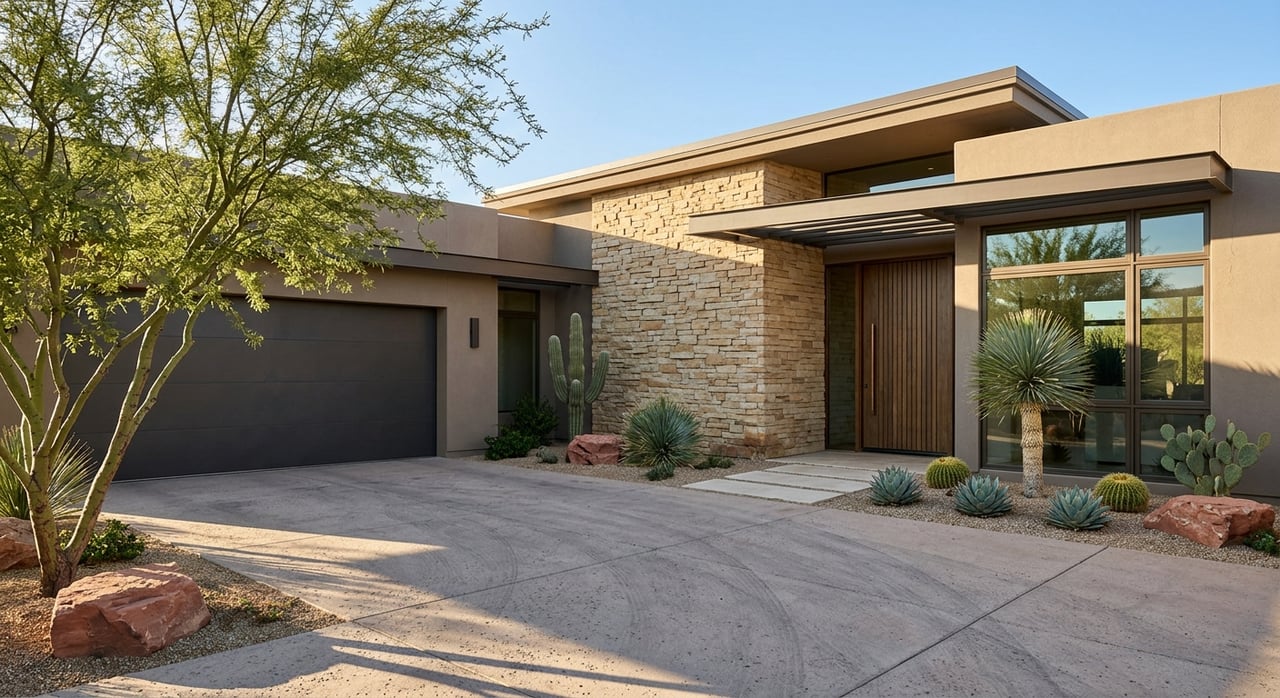
What It’s Like To Live In West Sedona Year-Round
May 28, 2026
May 28, 2026
Wondering whether West Sedona is a great place to live full-time, not just visit for a long weekend? If you love Sedona’s red-rock beauty but want a part of town that feels practical, connected, and easier to live in day after day, West Sedona stands out. Here’s what year-round life in West Sedona actually looks like, from daily convenience and trail access to housing variety and the rhythm of the seasons. Let’s dive in.
West Sedona has a different feel than areas that lean more heavily toward visitors. According to the City of Sedona’s planning documents, the West Sedona Corridor is centered around housing, civic uses, local retail, and walkability, with room for townhomes, apartments, mobile home parks, retail, services, and other everyday uses.
That matters when you live there full-time. Instead of feeling like you are tucked into a scenic area that only comes alive for tourism, you are in a part of Sedona where errands, appointments, and daily routines fit more naturally into your week.
One of the biggest advantages of living in West Sedona year-round is access to everyday services. Sedona’s planning materials identify City Hall, the fire station, the library, a charter school, grocery stores, pharmacies, coffee shops, and theaters within the west side’s daily orbit.
In practical terms, that gives West Sedona the feel of an everyday hub. You can handle a grocery run, stop for coffee, pick up prescriptions, and still be close to home without crossing multiple parts of town.
West Sedona’s appeal is not only about what is nearby. It is also about how those places connect. The city’s Trails & Pathways System is designed to link neighborhoods, shopping, jobs, schools, parks, open space, and the surrounding National Forest.
For full-time residents, that creates a lifestyle that feels more connected than car-dependent. You may still drive plenty, but West Sedona’s layout supports a more local rhythm where daily errands, neighborhood walks, and trail access can all happen on the same side of town.
If you picture Sedona living as a mix of scenic beauty and regular outdoor time, West Sedona delivers. This part of town offers especially strong access to trails and views, which can turn a typical weekday into something that feels a little more elevated.
The Forest Service notes that Brins Mesa Trail begins at the edge of town and opens to wide views of Coffee Pot Rock, Wilson Mountain, and Chimney Rock. Airport Loop also offers views over West Sedona, Capitol Butte, and Wilson Mountain, while the Thunder Mountain/Sanborn shared-use path runs east-west across West Sedona north of SR 89A.
For many residents, this is one of West Sedona’s biggest quality-of-life advantages. You are not simply living in Sedona and driving somewhere else to enjoy it. In West Sedona, access to the landscape can feel woven into your normal routine.
That can look like an early walk before work, a sunset loop after dinner, or a shorter outing between errands. For buyers who want Sedona scenery to be part of everyday life, not just a weekend event, West Sedona has strong appeal.
Living in West Sedona year-round means adjusting with the seasons, just like anywhere else. Visit Sedona reports mild winters and warm summers, with average January temperatures around 51°F for highs and 21°F for lows, and average July temperatures around 93°F for highs and 63°F for lows. Annual precipitation is about 19 inches.
Those numbers help explain why spring and fall are often the easiest seasons for longer hikes, patio time, and neighborhood walks. Summer can still be enjoyable, but it tends to reward early starts, shade, airflow, and reliable air conditioning.
Sedona’s heat-mitigation guidance notes that temperatures can rise above 90°F and even 100°F in summer. It also points out that more built-out parts of the city center can run hotter than less-developed areas.
For year-round residents, that usually means changing the schedule instead of giving up the lifestyle. Morning activity, shaded outdoor spaces, and an interior that stays cool become more important in the hottest stretches of the year.
West Sedona’s winter pattern is one reason some relocators and downsizers find the area appealing. Compared with markets that have longer stretches of severe cold, Sedona’s winter climate is relatively moderate.
You still want to pay attention to seasonal comfort and home features, but winter in West Sedona is often more about crisp mornings and sunny afternoons than deep seasonal shutdown. That can make it easier to stay active year-round.
A common misconception is that Sedona housing is mostly one type of home. In West Sedona, the city’s planning documents describe a broader mix that includes single-family homes, townhomes, condominiums, apartments, duplexes and multiplexes, patio homes, and existing mobile home parks.
That variety gives buyers more ways to approach year-round living. Depending on your goals, you may be looking for a lock-and-leave townhouse, a lower-maintenance condo, a patio home, or a detached home with more space and views.
Even with a range of housing types, West Sedona still sits within Sedona’s overall upper-price environment. Current listing examples in West Sedona show a broad spread, including properties around $689,000, $699,999, $889,000, $1.129 million, $1.545 million, $2.195 million, $3 million, and higher. Separate listing pages also show examples around $493,000 and $4.695 million.
That range tells you something important. Price in West Sedona can shift significantly based on views, lot size, age, updates, and finish level, so two homes in the same general area may serve very different budgets and lifestyles.
For broader context, Zillow’s Sedona home-value index was $906,178 on April 30, 2026. Redfin reported a median sale price of $1.32 million in March 2026.
Those are different measures, but both point to the same conclusion: Sedona is an expensive market overall. If you are considering West Sedona as a full-time home base, it helps to go in with realistic expectations about pricing and competition for well-positioned properties.
Sedona is a globally recognized destination, and some parts of town reflect that more strongly than others. Official tourism materials highlight areas such as Tlaquepaque, Hillside Sedona, and the SR 179 corridor, often called Gallery Row, as notable arts and shopping districts.
West Sedona participates in Sedona’s arts culture too. Visit Sedona notes that First Friday in the Galleries takes place in both Uptown and West Sedona, which shows that the west side is part of the city’s cultural life without feeling defined by tourism alone.
For many full-time residents, this is the key difference. West Sedona tends to feel more grounded in daily routines, with easier access to services, neighborhood connectivity, and housing choices that support year-round living.
If you want Sedona’s scenery and trail access but prefer a setting that reads more like a livable community than a visitor district, West Sedona is often the area that rises to the top of the list.
West Sedona can make sense for several kinds of buyers. It may appeal to downsizers who want convenience, remote workers who value a scenic setting with daily functionality, and full-time relocators who want to stay close to trails, services, and local amenities.
It can also be a strong option if you want a home base that feels active and connected throughout the year. Rather than separating practical life from lifestyle, West Sedona tends to bring those two things together.
At its best, living in West Sedona year-round means your daily life happens in the same place people travel to experience for a few days. You are close to grocery stores and coffee shops, but also near trailheads, pathways, and iconic views.
That blend is what makes the area stand out. West Sedona is not only scenic. It is one of the parts of Sedona that feels most set up for the routines of full-time living.
If you are comparing neighborhoods, that everyday ease can matter just as much as architecture, views, or price point. The right fit often comes down to how you want your days to work, not just how you want your home to look.
If you are considering a move to West Sedona or thinking about selling a property there, working with a local team that understands pricing, lifestyle fit, and the nuances of Sedona’s micro-markets can make the process much clearer. For candid guidance and experienced local representation, connect with Kris Anderson- ILoveSedonaRealEstate.
At ILoveSedonaRealEstate, we’re committed to making every step of your real estate experience seamless and rewarding. Contact us today to discover how our local expertise and tailored service can help you achieve your real estate goals.