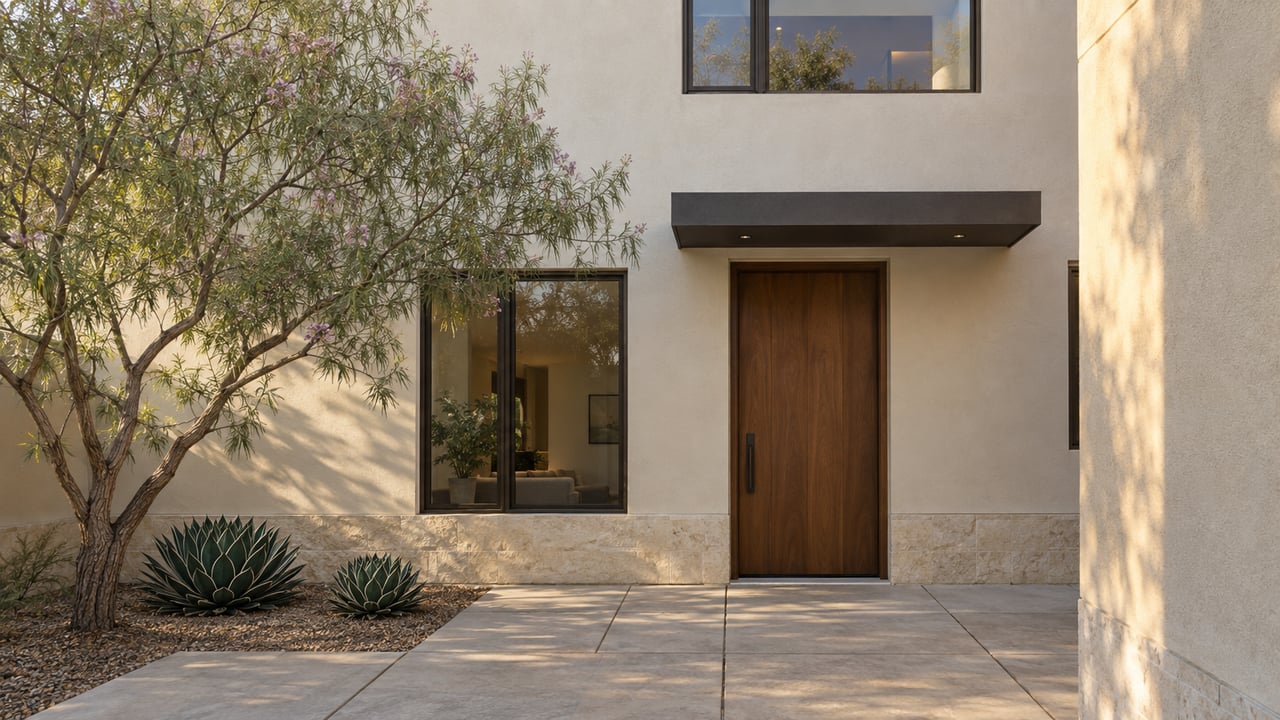
Scottsdale's Short-Term Rental License Can't Save You From Your Own HOA
October 1, 2026
October 1, 2026
As Arizona's Family reported, Scottsdale Mayor Lisa Borowsky said, "We're just really tired of it. It's gone on too long."
She made the remark this July as the city council had just handed police a new tool for shutting down short-term rental party houses ahead of the Fourth of July weekend. The trigger included a rough May: 56 charges and citations, 48 nuisance-related calls, and a shooting at a rental party inside the Maya complex, as KTAR reported. The council responded by defining "event center" in city code and, as of this month, standing up a dedicated Neighborhood Response Unit inside the Scottsdale Police Department to handle short-term rental enforcement specifically.
If you're evaluating an Old Town condo with an eye toward Airbnb or Vrbo income, that crackdown is worth knowing. But it's not the risk that actually derails deals. The city's licensing system, however aggressively enforced, is not what stands between you and a legal short-term rental in this neighborhood. As Lux Management Group notes, your building's HOA can restrict rental terms independently of the city's licensing system.
Scottsdale's short-term rental framework runs through Ordinance 4566, in effect since January 2023. Every property rented for stays under 30 days needs its own city license: a $250 annual fee, a valid Arizona Transaction Privilege Tax registration, at least $500,000 in liability coverage, a named emergency contact, and formal notification to neighboring units before you list. Ordinance 4719, the "event center" amendment passed this summer, layers on a separate restriction: no weddings, no corporate events, no ticketed gatherings, regardless of how the rest of your operation is licensed. Occupancy itself is capped, too. City code limits a rental to a single family of one to six adults plus any dependent children, which matters if you're pricing a three-bedroom unit against a group-travel market.
None of this is optional and none of it is new information if you've read a Scottsdale STR compliance guide before. Finishing this checklist doesn't mean you're clear to operate. It means you've satisfied the city. The building is a separate conversation entirely.
As StayAZ explains, Arizona state law prevents any city from banning short-term rentals outright in residential zones. Scottsdale has used nearly the full extent of the regulatory authority it does have, but an outright prohibition isn't part of that toolkit.
In Old Town specifically, this isn't a hypothetical. Several of the neighborhood's best-known buildings, including Optima Camelview Village, Envy, Edge, Inspire, and the newer W Residences, carry HOA covenants that restrict rental terms.
Old Town's numbers, pulled from the local multiple listing service in June 2026, put the median sale price across the neighborhood's core zip codes, 85251, 85250, and 85257, at roughly $702,000. Compare that to a Scottsdale citywide median near $982,000 the same month, North Scottsdale running closer to $1.27 million, and Paradise Valley sitting around $3.4 million. Old Town is, by a wide margin, the lowest-priced entry point into the Scottsdale name.
| Submarket | Approx. Median (June 2026) |
|---|---|
| Old Town Scottsdale | $702,000 |
| Scottsdale citywide | $982,000 |
| North Scottsdale | $1.27 million |
| Paradise Valley | $3.4 million |
That gap is exactly why Old Town draws so many buyers who are underwriting a short-term rental income stream as part of the purchase math. A condo priced under $750,000 with a plausible nightly rate is a very different offer than a $1.27 million gated estate carrying the same mortgage on primary-residence assumptions alone. The lower the entry price, the more the deal depends on rental income actually being available, and the more expensive it becomes when a building's HOA turns out to disagree with your plan after you've already closed.
Assume the HOA clears you. The next number to run is tax, and it's steeper than most out-of-state buyers expect. According to BNBCalc, Scottsdale's city layer alone runs 6.75 percent, combining a 1.75 percent hotel and motel privilege tax with a 5.0 percent transient lodging tax. Arizona's state transient lodging TPT adds another 5.5 percent. Maricopa County layers its own transient tax on top of both. Most estimates for the fully combined stack land somewhere between roughly 13 and 15 percent of the nightly rate, with the exact figure depending on which county rate applies to the specific parcel.
The tax stack is something to account for in the pro forma. The nightly rate you see advertised for comparable Old Town units isn't the number that lands in your account, and any pro forma built on gross nightly rates without adjusting for this stack is going to overstate what the property actually clears.
Even a building that permits short-term rentals today isn't guaranteed to stay that way. More Arizona HOAs have been amending their CC&Rs specifically to add or tighten rental restrictions, which means a building's current rules are a snapshot, not a promise. There's a limit to how far that can go retroactively. The Arizona Court of Appeals decision in Kalway v. Calabria Ranch HOA established that an association generally cannot adopt a CC&R amendment creating a new affirmative obligation, such as a rental ban, if that obligation wasn't reasonably foreseeable from the original declaration when the owner bought in. That case continues to shape HOA litigation into 2026, but it's a legal standard applied case by case, not a blanket guarantee that an existing owner is protected from every future rule change.
The practical read: a building's rental policy today matters, but so does the direction the association has been moving over the past few years and whether the CC&Rs already contemplate short-term use at all.
The document review window on an Arizona condo purchase is limited, so this checklist needs to run before you fall for a specific unit rather than during the contingency period:
Does a City of Scottsdale short-term rental license override my building's HOA rules? No. The city's license and the HOA's CC&Rs are two separate systems. Satisfying Ordinance 4566 does not obligate your association to allow short-term rentals if its own governing documents say otherwise.
Can my HOA add a new short-term rental ban after I already own there? It's possible, but not unlimited. Arizona case law, specifically Kalway v. Calabria Ranch HOA, has restricted an association's ability to impose new affirmative restrictions that weren't reasonably foreseeable from the original declaration. Whether a specific ban qualifies depends on the case's facts.
How much of my nightly rate actually goes to tax in Scottsdale? Combining the city's 6.75 percent, the state's 5.5 percent transient lodging TPT, and Maricopa County's additional transient tax typically lands the total somewhere between 13 and 15 percent of the nightly rate
If you're weighing an Old Town purchase with rental income built into the math, the building's governing documents deserve the same scrutiny as the unit itself, well before the offer goes in. Kris Anderson works both sides of this market, Sedona and Scottsdale, and can walk through a specific building's rental history and HOA documents with you before you commit to a number that depends on income the association might not allow.
This article is general information, not legal, tax or financial advice. Consult a qualified professional about your situation.
At ILoveSedonaRealEstate, we’re committed to making every step of your real estate experience seamless and rewarding. Contact us today to discover how our local expertise and tailored service can help you achieve your real estate goals.