How West Sedona Tells the Difference Between Smoke and Danger
September 3, 2026
September 3, 2026
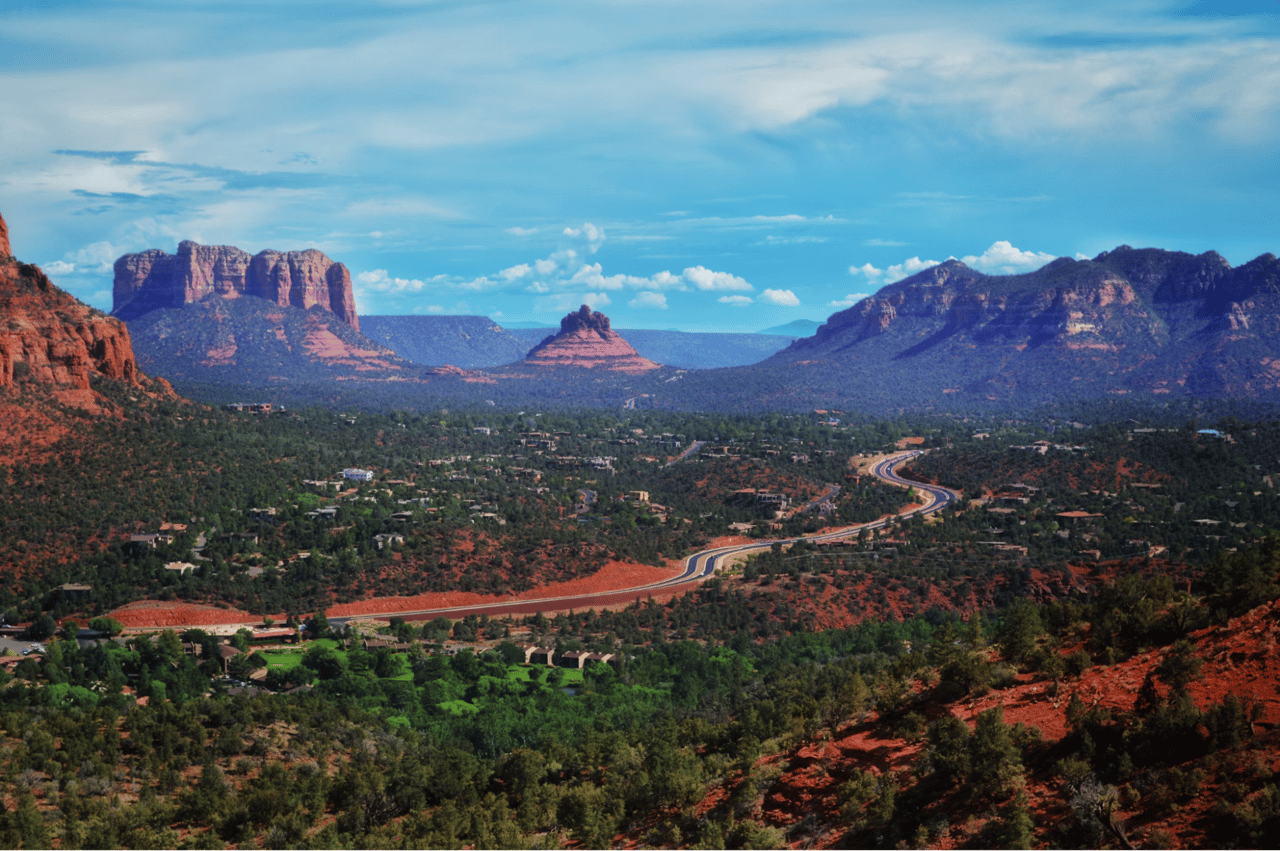
Walk the Thunder Mountain trailhead most mornings this week and you will notice it before you notice much else: a thin gray smudge sitting on the ridgeline behind Capitol Butte, the kind of haze that would make an out-of-towner reach for their phone. The locals walking their dogs past it toward Bark N' Purr Pet Care Center barely glance up. They already know what it is, roughly how long it will stay, and why nobody is telling them to leave.
That gap, between what the smoke looks like and what it actually means, is the real story in West Sedona right now. Reading it correctly is a small piece of local literacy that separates people who live here from people who are just visiting, and it shapes how this specific stretch of the neighborhood is spending its last weeks of summer.
The smoke comes from the Hart Fire, burning about eight miles northwest of Sedona and roughly a mile and a half north of the Palatki Heritage Site. It started in early August after a round of rain and lightning moved through the area, in terrain rugged enough that crews could not reach it on the ground right away. As of the most recent monitoring updates, the fire sits at 13 acres with no official containment number attached to it, and it is not expected to grow before monsoon storms put it out on their own. Firefighters are watching it from the air rather than fighting it street by street, because there is nothing on the ground worth fighting for. No structures or communities are considered threatened.
That last part matters more than the acreage. An unfamiliar reader sees "zero percent contained" and assumes the worst. Someone who has lived through a few Northern Arizona summers reads the same phrase alongside the size and the location and understands it as a fire that firefighters have decided to let the sky handle.
| What the report says | What it means on the ground in West Sedona |
|---|---|
| 13 acres, no official containment | Small enough that crews are monitoring, not battling |
| 8 miles northwest, inaccessible terrain | Visible smoke, no direct threat to homes |
| Started after lightning, early August | Typical monsoon-season ignition pattern for this stretch of Coconino National Forest |
| Expected to be extinguished by monsoon rain | No active suppression effort planned before that happens |
The city is not treating this as background noise, even if the fire itself isn't urgent. Sedona's Sustainability Department opened a program this month offering free HEPA filters to residents who are more vulnerable to smoke and dust, including young children, older adults, people with heart or lung conditions, pregnant residents, and anyone who works outdoors. The filters are available while supplies last, with priority going to the households most at risk.
City Emergency Management Coordinator Chance Wnuck framed the program as preparation rather than reaction:
"Having a HEPA filter available before smoke or dust affects our community can give people another layer of protection when air quality conditions change quickly."
That is the tell. A city bracing for a genuine emergency issues evacuation zones and shelter locations. A city managing a slow, low-grade smoke season builds a standing filter program and quietly lets residents opt in. West Sedona is currently living through the second version, and the difference is the whole point.
If the smoke were a real threat to daily life, the clearest evidence against it would be sitting on a lawn chair at The Wilde Resort and Spa on a Wednesday night. The Sedona International Film Festival has been partnering with the resort, located at 2250 W. State Route 89A, all summer for its "Wilde Wednesdays" outdoor screenings in The Grove Fire Pit Garden. Seating opens at 7 p.m., tickets run ten dollars with kids twelve and under free, and the routine hasn't changed even as the ridge behind the property has carried a visible smudge for weeks. This past Wednesday's screening, "10 Things I Hate About You" on August 26, drew the same blanket-and-lawn-chair crowd the series has all season.
The film festival's own office sits a few blocks up the same road at 2030 W. Highway 89A, which means the fire, the filters, and the movie nights are all playing out within a short drive of each other along the same corridor of West Sedona. Life here did not pause for the smoke. It adjusted around it, the way it always does this time of year.
A few of the routines still running normally along that stretch:
While the fire and the filters have been the loudest local headlines, a quieter one surfaced at a Rotary Club of Sedona Red Rocks presentation on July 28 at Community Library Sedona. West Sedona School principal Alisa Stieg told the group that 196 students have entered the district since she started two years ago, spanning pre-kindergarten through fifth grade. More than half of those newly entered students, 52 percent by her count, are enrolled in the school's Wildcat Extended Day program, which after-school director Jessica Sweeney described as a tool for early intervention as much as childcare.
Set against the smoke and filter news, this is the other West Sedona story worth knowing: a neighborhood quietly adding households with school-age kids, many of them choosing the district in part because the extended day option exists. It is not a dramatic number, but it is a steady one, and steady is usually the more accurate signal in a place that also gets a wildfire headline or two every August.
None of these threads, the fire, the filters, the movie nights, the school enrollment, is dramatic on its own. Together they describe how West Sedona actually processes a smoke season: it distinguishes real risk, like a fire that could threaten structures, from manageable background conditions, like haze on a ridge that will clear with the rains. It keeps its Wednesday routines. It builds slow, steady systems, whether that's a HEPA filter program or an after-school program, instead of reacting to every headline as an emergency.
That kind of local calibration doesn't show up in a satellite photo or a tourism brochure. It shows up in the dog walker who doesn't look twice at the ridge, and in a neighborhood that keeps its ordinary Wednesday plans exactly as they were.
If you already call West Sedona home and you're weighing what a property here is actually worth against a market that reads calmer than the headlines suggest, Kris Anderson has spent nearly three decades reading these signals for exactly this neighborhood. Get Your Confidential Home Valuation whenever you're ready for a straight answer.
Embrace a Lifestyle of Natural Beauty, Spiritual Energy, and Artistic Inspiration in Red Rock Country.
At ILoveSedonaRealEstate, we’re committed to making every step of your real estate experience seamless and rewarding. Contact us today to discover how our local expertise and tailored service can help you achieve your real estate goals.